
INGENUITY CREATES MILESTONES
OF INTELLIGENT MANUFACTURING
The expert team at Hospital Italiano de Buenos Aires has successfully completed Argentina’s first robotic-assisted ovarian tissue autotransplantation, with the support of the Toumai® surgical robotic system. This landmark procedure represents a national first and a pioneering achievement in Latin America, marking a significant advancement in the application of robotic technology in the field of oncofertility.
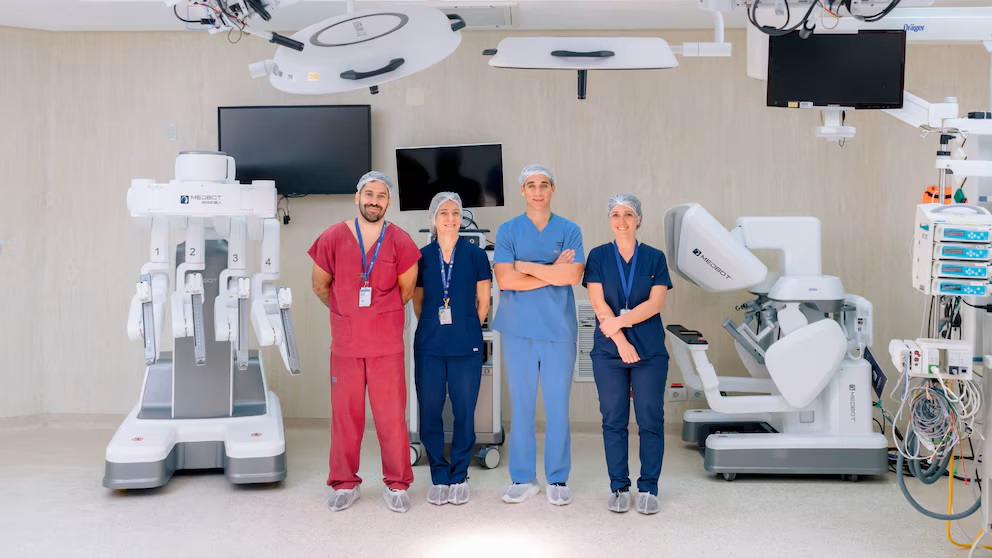
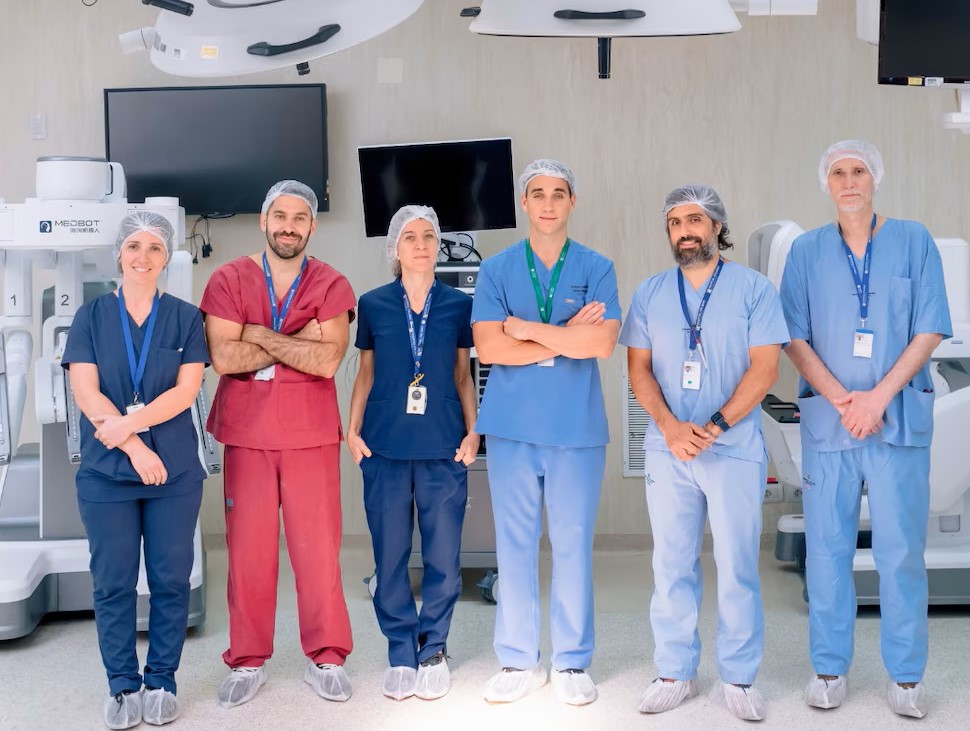
The procedure enabled a patient who had previously undergone cancer treatment to restore her reproductive potential. With this achievement, Argentina becomes the second country worldwide to apply robotic-assisted surgery in ovarian tissue autotransplantation. To date, fewer than eight comparable cases have been reported in the United States.
The patient, nearly 40 years old and without prior childbirth at the time of her cancer diagnosis, had an ovarian tissue cryopreservation and subsequent autotransplantation strategy established before initiating oncological treatment. Approximately one and a half years prior to the transplantation, a multidisciplinary team at Hospital Italiano performed the extraction and cryopreservation of ovarian tissue to preserve her fertility.
Following completion of cancer treatment and confirmation of clinical remission, the cryopreserved tissue was thawed and underwent safety assessment. The tissue was then precisely reimplanted using a minimally invasive, Toumai®-assisted robotic approach. The patient recovered uneventfully and was discharged within 24 hours. Postoperative follow-up includes regular hormonal assessments and ultrasound examinations to monitor the return of ovarian function, which is expected to occur within three to five months after surgery.
Associate Professor at the Hospital Italiano University Institute and gynecologic oncology surgeon Dr. Diego Odetto commented in an interview with Infobae:“Robotic surgery provides a very high level of precision in movement, along with superior visualization. The high-quality three-dimensional imaging allows us to work in extremely confined spaces while maintaining excellent visibility and accuracy.”
Dr. Romina Pesce, Head of the Reproductive Medicine Section and Associate Professor of Gynecology at Hospital Italiano, added:“Greater surgical precision and accurate tissue repositioning are critical for rapid revascularization, which directly impacts the success of the treatment. In many ways, this technique is establishing a new standard for how these procedures should be performed.”
Dr. Odetto further explained:“Ovarian tissue is extremely valuable for the patient, and its handling must be as meticulous as possible. With robotic assistance, we can use very delicate, stable movements to place the tissue exactly where it needs to be—creating, in this case, a small retroperitoneal pocket close to the ovary. Achieving this level of precision would be considerably more challenging using conventional laparoscopy or open surgery, which is why we chose a robotic approach.”
-
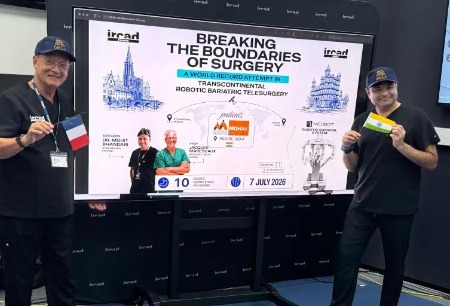 2026-07-15Toumai®Surgical Robotic System Supports Ten Cross-Continental Telesurgical Procedures During a Single Session at IRCAD France
 -
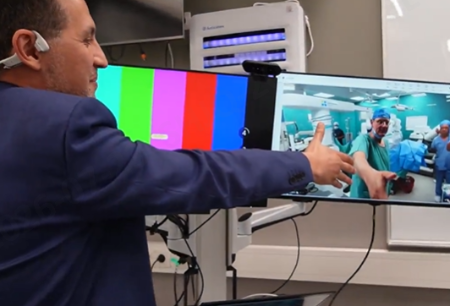 2026-07-10Oncorad Group and ORSI Academy Complete Bidirectional Intercontinental Robotic Telesurgery Between Africa and Europe
 -
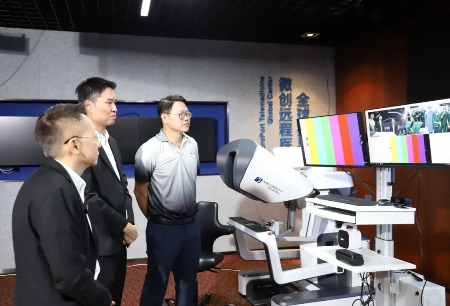 2026-06-29Toumai® Surgical Robotic System Completes Cross-Border Telesurgery Between China and Thailand




@Copyright 1998-2023,Shanghai Microport Medbot(Group)Co.,Ltd. All rights reserved.
Website record/ license No.:沪ICP备20013662号
 Hu ICP Bei No. 20013662 HGWA Bei No. 31011502015178
Internet Drug Information Service Qualification Certificate No.: (Hu) - Non-operating -2021-0020
The registered trademarks of “微创", "MicroPort" and"  " are registered trademarks of Shanghai MicroPort Medical (Group) Co., Ltd.” . They have been authorized to be used by Shanghai Microport Medbot (Group) Co., Ltd., and no other party shall use such trademarks without prior written permission thereof.